
Cart 0
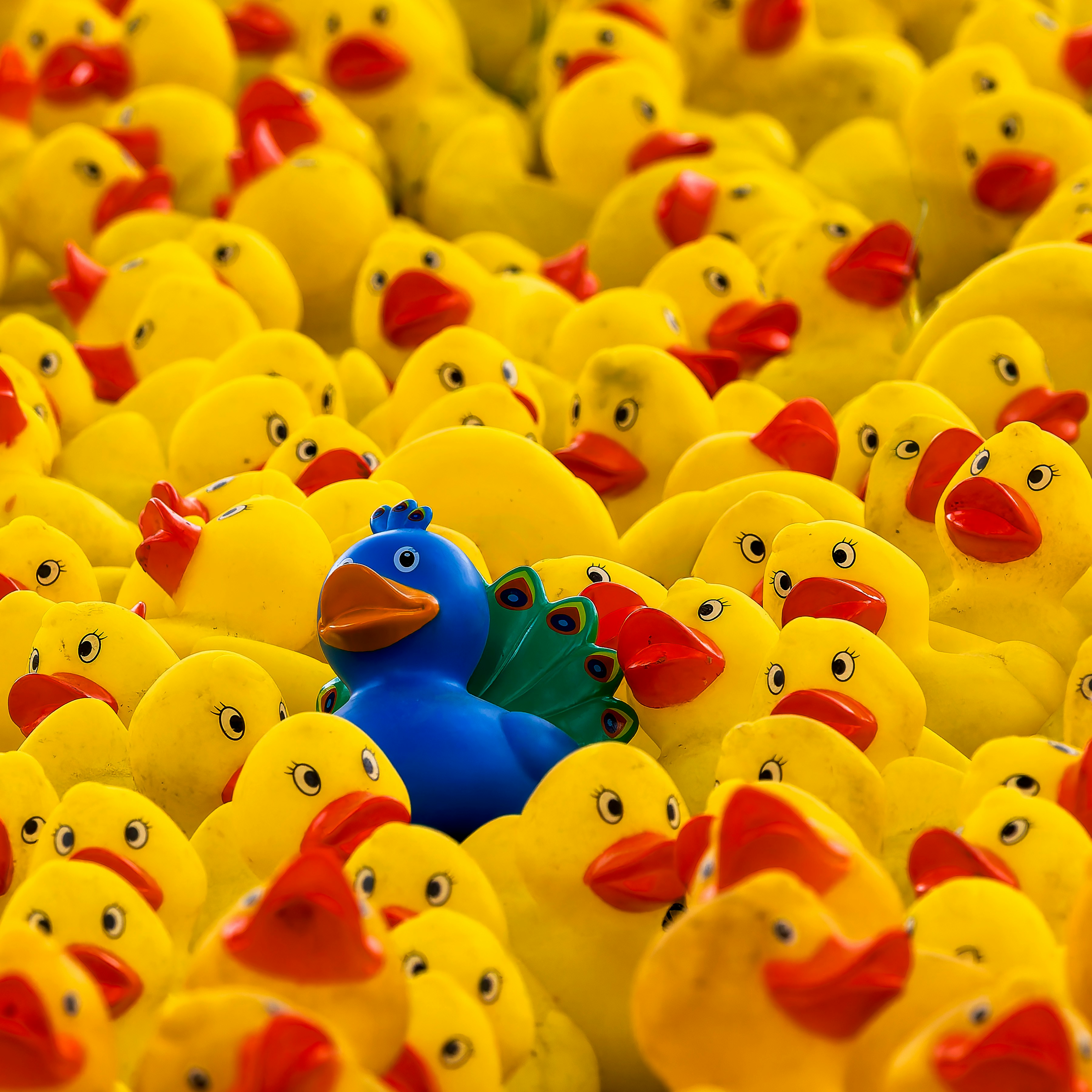
The internet promised humanity infinite knowledge. Instead, it often feels like we accidentally built an industrial-scale landfill for attention, entertainment and distraction. Artificial intelligence has accelerated this problem dramatically, and for the worse.
Every day now, millions of images, videos, essays, songs, presentations, advertisements and opinions are generated instantly by people who previously lacked either the ability, patience or imagination to create them. Social media feeds are filling with synthetic motivation, synthetic beauty, synthetic expertise and synthetic emotion. Fake podcasts. Fake photographs. Fake scholarship. Fake intimacy. Entire oceans of content assembled in seconds and forgotten minutes later. I hate it, and I’m sure most of us are sick of it.
Beneath all the technological novelty lies an uncomfortable question: What happens to human creativity when all the friction disappears?
Part of the joy of making something worthwhile has always been difficulty. A painting mattered partly because someone spent years learning perspective, anatomy, composition and colour. Some artists took years to execute a single project and never completed it. Famously, Cezanne would spend years on a single painting and kept making changes – indeed some of his great works he never thought of as finished. Leonard Cohen tweaked and rearranged Hallelujah so many times that it’s unclear whether it ever was complete. A great novel carried weight because some genius wrestled with language, structure and thought for thousands of lonely hours, making minor edits and burning drafts that displeased them.
Even imagination requires effort. If you wanted to visualize the great Achilles fighting Hector or wonder what the Library of Alexandria looked like, your own mind had to participate in the act of creation. Whenever I told a story on radio, I had to remember that every person had different pictures in the minds. Hundreds of thousands of imaginations that could take one story and invent a corollary of their own. Books used to do that too. When JK Rowling wrote Harry Potter, she took great trouble to describe things that appeared instantly in the movies. Suddenly imagination was unnecessary, or at least less necessary. AI will take that to new highs (or lows) and deliver convincing (if sometimes ridiculous) sensory affirmation of our simplest, most craft-less impromptu ideas.
Participation in the process matters more than we realise. Humans developed interior worlds because reality demanded them. We imagined things because we had to. Stories lived inside us before they existed on screens. Children once built entire universes from sticks, blankets and boredom. Now a teenager can generate a photorealistic apocalypse, an orchestral soundtrack and a cinematic trailer before breakfast without developing a single artistic skill along the way; and it will be utterly worthless. He can’t claim real authorship, and even if it goes viral, it’ll be forgotten tomorrow and replaced with the next thing.
Technologically, this is astonishing. Spiritually, culturally and psychologically, the consequences are less likely to be positive.
Do you ever wonder if abundance can destroy value? Think about gold. It’s precious only because there isn’t a lot of it. At present, we desire material wealth – and yet we live in an age of information wealth. The greatest renaissance philosopher would have dreamed of endless learning the way some of us dream of endless money – and yet few among us have stopped to consider the phenomenon of access to all of human knowledge that the internet provides. Fewer still use it, every day, for noble and aspirational purposes, consistently. Most are satisfied to scroll mindlessly through amateurish, algorithm-generated alluvion designed only to amuse or animate us, momentarily.
Masterpieces mattered because mastery itself was rare. Competence carried social prestige because acquiring it required sacrifice, discipline and time. Human beings naturally attach value to things that are difficult to achieve because difficulty signals seriousness.
AI has begun dissolving that signal everywhere simultaneously. A business presentation that once took a talented team several weeks can now be generated in an afternoon. Political speeches can be written instantly in the voice of Churchill, Obama or Cicero. Entire marketing campaigns appear at the push of a button. Research tasks that once consumed months of academic labour now take hours. Feature films are beginning to emerge from prompts typed by people who have never touched a camera.
I don’t mean to depress you. Some of this is obviously useful, and much of it is extraordinary. But they’re not the same as meaning or mastery.
Modern civilisation already suffers from a crisis of overproduction. There is too much advertising, too much commentary, too much entertainment, too much noise. Content – all of it – is in a race to the bottom, and AI dramatically lowers the cost of creating more of it. The result is what many people are beginning to call AI slop – endless streams of low-cost, low-effort synthetic content optimised for clicks rather than insight.
And if we’re being honest, human beings are remarkably bad at resisting convenience.
Why spend ten years learning to paint when software can imitate the aesthetic instantly? Why learn cinematography, orchestration or rhetoric when algorithms can simulate competence convincingly enough for most audiences? Why cultivate taste when recommendation engines flatten culture into whatever generates the most engagement?
Real creativity has never been purely technical. Technique matters enormously, of course, but genuine imagination emerges from consciousness colliding with experience. It comes from suffering, observation, obsession, humour, memory, loneliness, love, humiliation, curiosity and taste. Human beings create great art because they notice things other people miss. They connect ideas emotionally and symbolically across time. They reveal truths hiding beneath ordinary life. Machines can imitate patterns extraordinarily well, but patterns are not the same thing as wisdom. Our work matters partly because the life behind it matters.
Audiences can already feel this distinction instinctively, even when they struggle to articulate it. People still queue for live concerts despite having infinite recorded music available instantly. Original paintings still command enormous value despite unlimited digital reproductions. Handcrafted objects still feel different. A speech delivered by somebody who genuinely believes what they are saying still carries emotional force that generated rhetoric struggles to replicate convincingly. People are not merely consumers of information, we are constantly searching for evidence of soul, effort and authenticity – and that search may become more important than ever.
There are many who say that AI may end up increasing the value of genuinely human work precisely because synthetic content is becoming so abundant. In a world flooded with generated mediocrity, originality becomes easier to recognise. Real craftsmanship stands out more sharply against industrial quantities of imitation. Audiences may eventually become more selective, not less – they may turn from slop toward people with something real to say; toward creators with taste; toward individuals capable of independent thought rather than algorithmic assembly and toward work carrying fingerprints of lived experience.
I think we all understand something very old – that easy things rarely change us.
The books that alter your life are the difficult books. The achievements that produce pride are difficult achievements. Strong bodies emerge through resistance. Deep relationships require sacrifice. Character itself is largely forged through voluntary difficulty – and character is rare. Remove all friction from human existence and life quickly begins to feel weightless.
Humanity now possesses tools capable of eliminating extraordinary amounts of labour, effort and technical limitation. Yet the things people continue to value most deeply — wisdom, beauty, originality, love, courage, humour, transcendence, meaning — still emerge through profoundly human struggle and imagination.
And somewhere beneath all the synthetic noise, people still know the difference.