
Cart 0
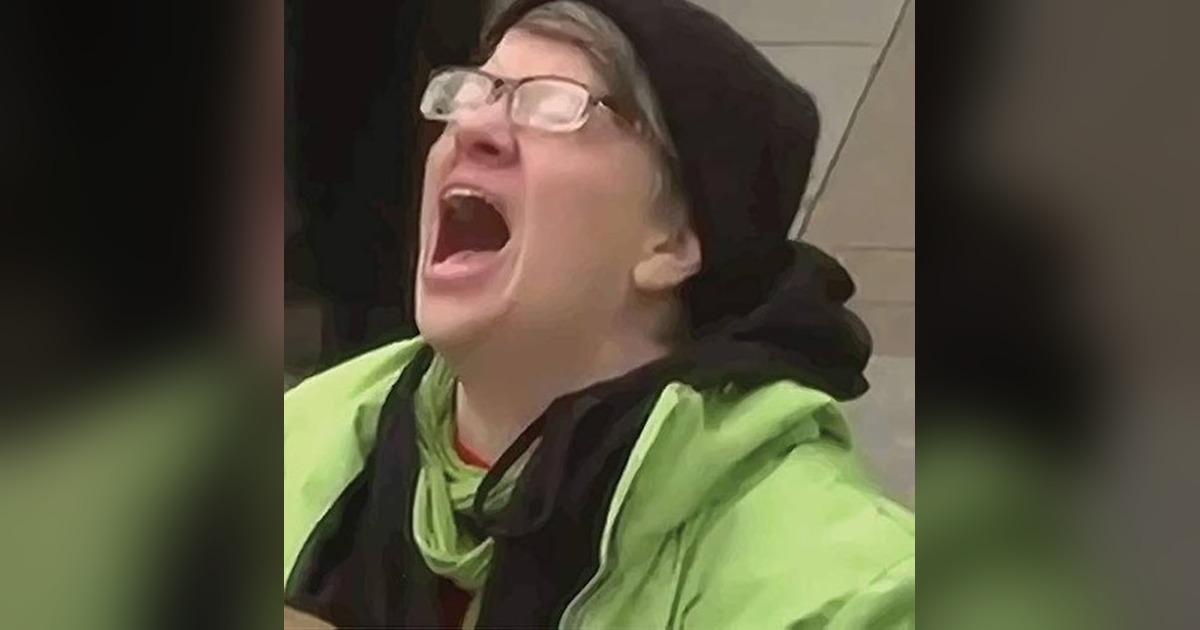

I remember Christopher Hitchens’ impertinent article “Why Women Aren’t Funny” for Vanity Fair back in 2007, at the height of his powers. Its publication led to a great hissing, screaming, hysterical reaction from a coven of humourless women, sort of proving his point. Many women (and men) agreed or disagreed, with varying levels of intelligent consideration and outright foolishness. Female comics went into a frenzied rebuttal of the premise, a few making hilarious counter-arguments that in some cases launched careers.
I sometimes wonder what Hitchens would make of 2026. He was a towering public intellectual, burning bright in the heat of his well-deserved confidence in an era before everyone had an opinion and opinions became worthless. Armed with a combination of painfully sharp wit, unsubtle insults and unimpeachable arguments, he would turn a polite disagreement into a broadside that utterly devastated his opponents on subjects as varied as literature, politics and of course, religion. Perhaps he’d be drowned out by the clickbait, conspiratorial midwits who have lately appointed themselves the arbiters of debate and public thought – the kinds of people who tell you about their podcast before you’re even sure that they’re not the hired help at a cocktail party. We’re left to make the best of what we’ve got – meagre as the returns might be.
With that in mind, I’d like to throw some raw meat at the voracious mobs that patrol the streets of our modern public discourse: Is politics still the realm of men, and has the entry of women improved or devalued it?
Before you react, it’s worth giving some context to the question. Out of many available examples, American electoral politics gives us perhaps the best starting point for what will invariably turn into a heated argument: In polling, elections, online fora and at dinner tables it has become abundantly clear that the Democratic Party has become, at its core, a party catering to the interests of liberal women. They are by far the biggest voting bloc within the party – across states, income groups, age groups, hair colour (often blue or green), race and religion. So powerful have they become that all Democrat messaging is filtered first through them, and then through less important constituencies. Kamala Harris, Hillary Clinton, Alexandria Ocasio-Cortez, Nancy Pelosi, and other women like Gavin Newsom and James Talarico are the faces and voices of the New Democratic Party. All the major issues on that side of the divide, for almost a decade – abortion, border control, economic policy, trans rights, #MeToo, COVID policy and climate change – have increasingly been framed around the concerns of liberal women. Even subjects that were meaningless to most Americans – like Gaza – have been championed by Ilhan Omar, Rashida Tlaib, Greta Thunberg and the girl from Harry Potter. So this isn’t mere provocation on my part. It’s a very serious observation of the role that liberal women play in the Western world and whether or not this has been advantageous.
Consider the fact that for all of recorded human history, most women only played a role in politics if she was heir to some kind of autocracy, and usually because her father, brother or husband didn’t have a better option. This is not my point of view, it’s an established fact – and any honest historian will tell you that. That there were women who wielded enormous influence, traded in soft power, changed the world and made history is equally undeniable, but the active political role was almost always the province of men. For the sake of fairness, Queens Hatshepsut, Elizabeth I and Empress Wu Zetian were absolutely the main characters in the story of their nations, as were many other great women of history, but ordinary women weren’t asked to participate in the government of anything bigger than the family or a small foraging group until New Zealand became the first country to deliver universal suffrage on the 8th of September 1893, and by a slim margin. Since then, an admirable movement of dramatic and rapid change across the world has led to the circumstances we now take for granted: That women have the right to vote, that in many countries they outnumber men and that they vote with perhaps even greater influence and zeal than their male counterparts. The last real country to acquiesce to the inevitable was Saudi Arabia, which held out until just ten years ago. Only in the Vatican does participation in politics still elude the gentler sex. Despite this, our political inheritance is almost entirely the house that men built. Political philosophy, political systems, public office and the consequences of political power were, until as late as perhaps 70 years ago, male domains. I’m not diminishing the contribution of the suffragettes, early feminists, the Woman’s Christian Temperance Union, or Women’s Lib, but they were fringe movements and had symbolic rather than politically devastating effects. That has changed. We live, certainly in the Western world, in a polity where the tables have turned – and the Democrats in America are at the vanguard of a contending new world order. Some will see this as a great victory against the patriarchy, and others will be less enthusiastic.
In the interests of getting to the point, rather than delivering a history lecture, I’ll ask the question directly: Has the world has been significantly changed or improved by the entry of women into politics? I don’t have the answer, but with a century of track record, it’s worth a glance in the rear-view mirror. There’s no shortage of voices that insist that if women ruled the world, it would be a better place. You don’t have to listen carefully to hear that what women want has, quite justly in some ways, become a priority in many Western countries. Women, for the first time, outnumber men in universities and professions like the law, and occupy an unprecedented array of powerful offices. Feminists will tell you it’s not enough, and perhaps they’re right, but we have enough data to start, at least, putting these awkward questions into objective AI models and getting impartial answers.
The reason I mentioned that liberal women dominate the modern Democratic Party is that the distinction matters. Those same liberal women have a very low regard for the contribution of, say, the peerless Margaret Thatcher – a conservative. While liberal women are so conspicuous and vocal that every protest attracts millions of them, conservative American women are so rare that you can name all of them – each has a podcast. Either that, or the conservative ones aren’t as loud as their liberal sisters.
Women’s influence and political power have evolved, in a remarkably short time, into a subject of study in their own right. Many universities offer degrees devoted to the study of this evolution, and I’m by no means the first or the best person to deliver any conclusions. What makes this so wretched a subject is that suffrage, women’s rights, gender equality and the great strides women have made in business, society and culture still depend a little too much on men for their enforcement and execution. We saw what happened to the girls of Afghanistan who dreamed of going to school when the Taliban were bombed out of power only to have those dreams extinguished when the Taliban returned twenty years later. Under China’s one-child policy, millions of female foetuses were aborted and infant girls abandoned or killed because sons were preferred — all within living memory. In my own country, gender-based violence occurs at levels that might make medieval Europe blush, and the ANC Women’s League hasn’t yet made a speech that made a single girl safer. In war zones, there is precious little space for feminist politics to take root, and in spite of all the summits, institutions and elections, when it gets hot in the kitchen of global conflict, it’s the men and not the women who put on the apron and do the horrible stuff. Don’t get me wrong, I’m not arguing against the 19th Amendment, and I’m not suggesting a value hierarchy of what makes or breaks civilisations – but unless we take seriously the knife’s edge upon which organisations like the Democratic Party now balance, some might say that the whole enterprise is just a little precarious.
The reaction of some to Hitchens wasn’t a rebuttal; it was a confirmation, and the same reflex is often on display any time someone asks what has actually been built rather than what’s being claimed. “Just 70 years” quickly becomes “70 sacred years” depending on whether you’re applauding the era or auditing it.
A friend of mine said that Thatcher is the whole argument in one name. She was popular with men and conservative women, but loathed by the women who now claim to speak for all women – which raises the possibility that the objective may never have been women in politics at all. A cynic might say that it’s pandering to the vanity of a faction that represents a shiny demographic opportunity. The optics, to use a detestable term from the era of performative politics, could be nothing more than the kind of patronising thing men do to mollify the women they love: an empty gesture. Because anywhere the enforcement muscle disappears, whether it’s in Kabul or Kentucky, or anywhere the talking, the protests and the tolerance run out of runway, so do the rights. That makes the whole project look less like destiny and more like a tenuous arrangement entirely dependent on someone else’s goodwill.